The Canal Remembers
Third Position- English, Nāgrika Youth Writing Contest 2026
By Hitarth D. Buvariya
City: Nadiad, Gujarat
For fifty years, a canal beside a college hostel in Nadiad has watched generations of students arrive as children and leave as adults. It has witnessed parents struggling to say goodbye, friendships taking root, students learning to navigate loneliness and failure, and a city quietly evolving around the needs of those who pass through it.
Told through the eyes of the canal, The Canal Remembers is a reflection on how places shape us and how change happens almost imperceptibly. From hostel rooms and tea stalls to classrooms, cafés and placement halls, the story traces the many ways a student and a city evolve together.
Because when the next July comes, the canal will still be there. The water will be different. The student will be different, neither will know exactly when the change happened.

Somewhere in this state, there is a dam I don't know about. When the monsoon arrives, men turn a wheel, the gates open, and water rushes into channels it did not choose. And with the water come fish, fingerlings, barely the length of a matchstick, born somewhere upstream, carried into a canal they have never seen.
Every year, just like those fish, students arrive.
Families come to Nadiad to leave a piece of themselves behind. A father. A mother. Sometimes a grandmother who insisted on coming despite the journey. In the rickshaw from the station, the father cracks jokes that aren't very funny, and everyone laughs anyway. The mother asks ordinary questions because ordinary questions are easier than the one she cannot ask. The rickshaw stops at the hostel gate.
The father carries the heavier bags. The son reaches for one. They argue over who should carry it, both pretending the weight is the point. The mother brings food from home, she always does, and tells him to finish it today. Neither of them knows it will taste more like home tomorrow than it does now.
Once, trunks had iron locks; now, zips and codes. Once, mothers waited outside while fathers spoke to the warden; now she walks straight into the room, opens the cupboard, and arranges his clothes exactly as she would at home. The father asks about food timings and hostel rules,
then introduces himself to the roommate, a stranger this afternoon and, perhaps, family by winter. Outside, the mother pauses near the gate, noticing the shops, the lights, the people passing by, not really looking at them, only teaching herself that there will be food nearby, people nearby, help nearby.
This is the oldest instinct there is.
If the grandmother has come, she slips folded notes into his hand. Eat on time. Don't trust everyone too quickly. He answers yes each time because some conversations are only fear wearing different clothes.
Everyone delays the moment. But a waiting rickshaw cannot wait forever.
The mother hugs him last, too long and too short in the same second and turns away before he can see her face. The father does not hug. He taps his son's shoulder twice, then briefly touches his cheek before walking away.
The boy watches the rickshaw disappear.
I am the canal beside that hostel. For fifty years I have watched this goodbye repeat itself. Trunks became suitcases; suitcases became backpacks. Fathers who once believed their job ended at the hostel gate now call just to ask if he is all right.Mothers who once waited weeks for that same answer now ask it every evening, over a phone call.
The bags have become lighter. The goodbye never has.

I will tell you a secret about myself. I do not flow because something pushes me. I flow because the water ahead of me moved first, leaving an empty space I simply fill. Then the water behind me fills the space I leave. That is all a current has ever been.
This is the only law I have ever needed to understand change.
Something stable is disturbed. A mismatch appears between what exists and what is needed. The mismatch hurts, as any unanswered need does. Pain goes looking for relief, and whatever relieves it survives, until it creates the next mismatch. People call this evolution. Evolution is not a climb toward something better. It is only pain finding relief.
Before 1968, Nadiad had no mismatch to speak of. A temple, a market, a station, a lake, a farming town, an administrative town, a town of Sardar Patel and Santram Mandir that had already answered every question likely to be asked. Then a man opened a college with one department, and the disturbance began. A few hundred students arrived overnight carrying needs this town had never had to think about. Students with nowhere to sleep, nowhere to eat, no light to study by after dark. A house became a PG. A kitchen became a mess. A roadside man became a tea seller. None of it was planned; all of it was relief, arriving where the pain was worst.
Then the college became a university. More departments came. The old answers were no longer enough. A few PGs could not absorb thousands of students, so hostels rose in their place. The old relief had become the new mismatch, evolution paused long enough to be called normal.
A response is never guaranteed to match the pain it was built for. Every generation arrived carrying a different mismatch. A student from a village near Dakor in 1975 needed a bed and a plate of food. A student from Surat in 2015 needed all of that and Wi-Fi, food past midnight, and
somewhere less lonely than their room. The town's first answers were never built to survive this many follow-up questions. That, too, is evolution.
You can watch the city's nervous system responding. UPI boards appeared because students stopped carrying cash. Cafes stayed open later because students stayed awake later. Food delivery arrived because hunger no longer followed hostel timings. Every business was simply answering a pain somebody else had created.
But inside the college gates, the professors did not update. The blackboards stayed. The attendance sheet stayed. The lecture stayed the same even as the student changed. The system treated indiscipline as the pain, when understanding had become the greater one. It became the most boring, least evolved organ in this city's body. The college decided the students were the ones who needed changing.
So evolution happened elsewhere.
A student who left a lecture confused had no choice but to remain confused. Then YouTube arrived. It answered many questions, but only the questions somebody else had already asked. The classroom and YouTube never quite matched, and the student was ground between them like grain between two stones that never turned at the same speed. Around 2022 another response appeared. A machine that could be interrupted, questioned, argued with, corrected, and asked the same thing five times without shame. It gave weight to the question, not to whether the student had signed an attendance sheet.
People call that progress; it is not. It is only evolution answering a pain the old system refused to.
Some things disappeared. The Food Zone is gone now, that whole loud, greasy stretch of Kathiyawadi Twist, Samrat Chinese and the paratha stall. Dwarkadesh no longer stays open past one in the morning, and with it disappeared hundreds of conversations that taught more than some lectures did.
And some things never needed to evolve at all. The bell at Amba Mataji still finds seven-thirty. Punjab Bakery still bakes its puffs the way it always has. Santram Mandir still stands where it stood before the first engineering student arrived, and people still greet each other with Jai Maharaj. The banyan tree by the Hanuman temple still gives shade without asking who sits beneath it.
I have watched this city longer than any student has lived. Some answers disappear. Some never need to change. Systems that refuse to notice the pain before them are eventually replaced by ones that do.

Now, the evolution that no one could see.
When a fish enters new water for the first time, it arrives only with fear, and the canal spends the next few days teaching it what deserves that fear. Swept once by the current, it learns exactly how much water can be fought and how much must simply be survived.
A fresher does the same. He arrives in July with a steel trunk and a mother's voice still warm in his ear. Some students around him speak English like a river, and he says, my, myself, somebody laughs, and he does not speak again for a month. He reads the menu from the prices first and orders tea because tea is twenty and fries are a hundred eighty. He orders fries once and realises, watching the bill, that fries are a decision, not a habit, a lesson that outlasts any lecture on budgeting. He is late to one lab and watches a professor cross a name off a list, and in that single stroke understands exactly how much this institution values a signature over a mind. Every night he calls home. His mother asks, Did you eat? He says, Yes, Maa, even when dinner was only tea, because he has already learned that some worries become heavier the moment they are shared.
By the second year the fish no longer fights the canal. Its muscles remember currents they resisted. It is no longer simply living in this water. It has been shaped by it.
The boy has changed just as quietly. The tea seller has stopped asking his name and started asking, Usual? He has a group now, three or four boys who always end up on my bank together. They play cards in somebody's room at Blossom Aura. They walk three kilometres to Shreeji for soda, to save ten rupees on a rickshaw, never realising they are really going for the walk. His voice has borrowed words from roommates four states away, softened at the edges; even his stomach has made peace with the mess food that defeated it in month one.
By the third year the fish no longer notices the current. This is the canal's most dangerous gift. Familiarity feels so much like safety, the fish forgets they differ.
The boy has stopped being afraid of exams. He has stopped being excited by fests. He has stopped arguing with the attendance system. He goes to class, signs the sheet, opens his phone beneath the desk, and leaves. When lectures fail him, he learns from YouTube and now from a machine that answers at two in the morning without judging him. The system has not changed him into an engineer. It has changed him into someone who no longer expects the system to change. His father calls, and the conversation lasts ten minutes instead of an hour. His mother says, You sound tired. He says, I am fine, and he is not.
By the fourth year the smaller fish follow it through water that frightened them. Nothing inside it changed overnight. Only its place in the canal did.
The boy walks through campus the way he walks through his own house. A junior stops him, calls him bhai, asks where to eat, unknowingly setting a habit for three years. He has been four different people in four years, each one a quiet death of the one before, though he never noticed any of them go. He only knows that the boy who could not say my, myself is not the man standing before a company recruiter in a white shirt with a résumé still warm from R. Patel Xerox.
This inner revolution also evolves. The boy who came in 2005 became an adult differently from the boy who came in 2015. The tools changed. The loneliness changed shape. In 2005 he wrote letters home. In 2015 he sent voice notes. In 2024 he sends nothing, because silence has also learned to travel through Wi-Fi. The fear is the same. Only the way a boy carries it has evolved.

When a fish is young, it swims beside its mother. Then the current separates them. The young fish joins a school of strangers, and over time the strangers become its school, its life. It does not forget the mother. It simply stops swimming beside her.
When a boy is seventeen, his mother folds his shirts and puts them in a trunk. For the first semester he folds them exactly the way she taught him. By the final year the folds are gone; his clothes dry on a hostel railing, worn wrinkled because life has become too full. He understands, now, the value of the hands that used to do this. And one day his father calls to ask how to use AI, and the son explains it twice, patiently, and something turns over between them that neither of them mentions. And one day the boy goes home after a semester and the time seems moving faster, and while leaving says, I'll be back, in the same voice he uses at the hostel, from that day he belongs to two places, completely to neither. His father asks him to lift a heavy sack, and he lifts it, and only later, on the train, does he understand that the sack has not become heavier. His father has become older. That is the sentence that ends childhood in this country, and it is never spoken aloud.
They arrive asking who will take care of me. Four years later, without noticing the day it changed, they are asking who depends on me. That is the degree. The paper is only the receipt.

Now the Season of the Nets
A fish does not stay in a canal forever.
Every winter, men come with fine nets, collecting for the aquariums of the city. They do not take everyone; they hold each fish to the light for a moment and decide where its life will be spent. Good colour. Good size. Good health. The chosen leave inside small containers carrying the last water they have known. By morning they are swimming behind clean glass, where food arrives on time and the water is clear.
They are alive. They are admired. But every current that shaped them has been replaced by glass.
In the seventh semester, the city turns white. White shirts. White formals. Resumes still warm from R. Patel Xerox. In the old hall, beneath a dying projector, companies hold students up to the light for fifteen minutes. Good CGPA. Good English. Good confidence. When the letter comes, friends shout, and somebody buys pizza for the Wednesday offer.
There was a time when the biggest companies came; names that fathers repeated with pride at the tea shop. Then recessions and layoffs shrank the names. Now smaller aquariums come,
and the students take what they get, because the alternative is returning to the village with an engineering degree and no answer.
Some fish refuse the net entirely. They turn away and choose another current, family businesses, new countries, new dreams, or work of their own.
The chosen walk away carrying offer letters. Parents smile. Friends clap. Photographs are taken. The rest fold the same résumé back into the same folder and return to the hostel carrying a silence that weighs more than failure ever should.
Most of them wake up the next morning. They prepare again. They find another company, another city, another dream. Some were never meant for that aquarium.
But not all of them.
That is when the fishermen arrive.
They are not looking for the strongest fish. They are looking for the one that has stopped fighting the current. They lower a hook baited with something that smells like relief. The fish does not bite because it wants to die. It bites believing the hook might lead to opportunity. But a fish lifted out of the only water it was made to live in cannot survive. Sometimes, neither can a student.
Every education city has a season when a few students mistake one rejection for the end of their future. They begin to believe they have disappointed their parents, wasted their family's savings, and become a burden instead of a hope. Hopelessness whispers that there is no other water left to swim in.
I know that voice. I have heard it on my bridge after midnight.
I have carried laughter after selections, and I have carried silence after rejections. And on some nights, when the hostels have gone dark and the bridge is empty, I have watched students climb over the railing believing death is easier than another morning of shame. They entered my water
believing they had reached the end of their story, even though it was only the end of one chapter.
Nobody arrives as one person and leaves as the same one.
A fish only becomes a version of itself that has met this water. A student becomes someone else entirely, because what they meet here is never just water. It is exam halls, empty hostel rooms after midnight, a mother's voice growing shorter on the phone, and a father's hands growing older between one visit and the next.
The real change was never the hostels, the tea stalls, or the placements, only the things people could see. It happened quietly. A student folds their own shirt badly for the first time, that is where the child begins to leave. They lie to their mother so she worries less, that is where the adult quietly arrives. They sit alone on my railing at midnight, needing nothing fixed, only needing somewhere to sit.
Growing up has only one direction. It moves from someone who needed to be cared for, to someone who learns to care for others. It never asks whether they are ready.
Next July the gates will open again. A new fish will enter my water. A new mother will fold new shirts with loving hands, saying nothing of the fear she carries. And somewhere on my bank, a student who arrived as a child will leave carrying a résumé, a scar or two, friendships that will outlive the degree.
They will never know exactly when they changed. Nobody ever does. Change never announces itself while it is happening. It only becomes visible afterward, the way a canal reveals how deeply it has shaped the land only after many years.
I am still here. Still holding this bridge. Still carrying water that is never the same water twice. Every year they arrive believing they are only passing through me. They never realise that I am passing through them too.
And when the next July comes, I will be here again, waiting for another frightened child who does not yet know the person they are about to become.

About the Author:
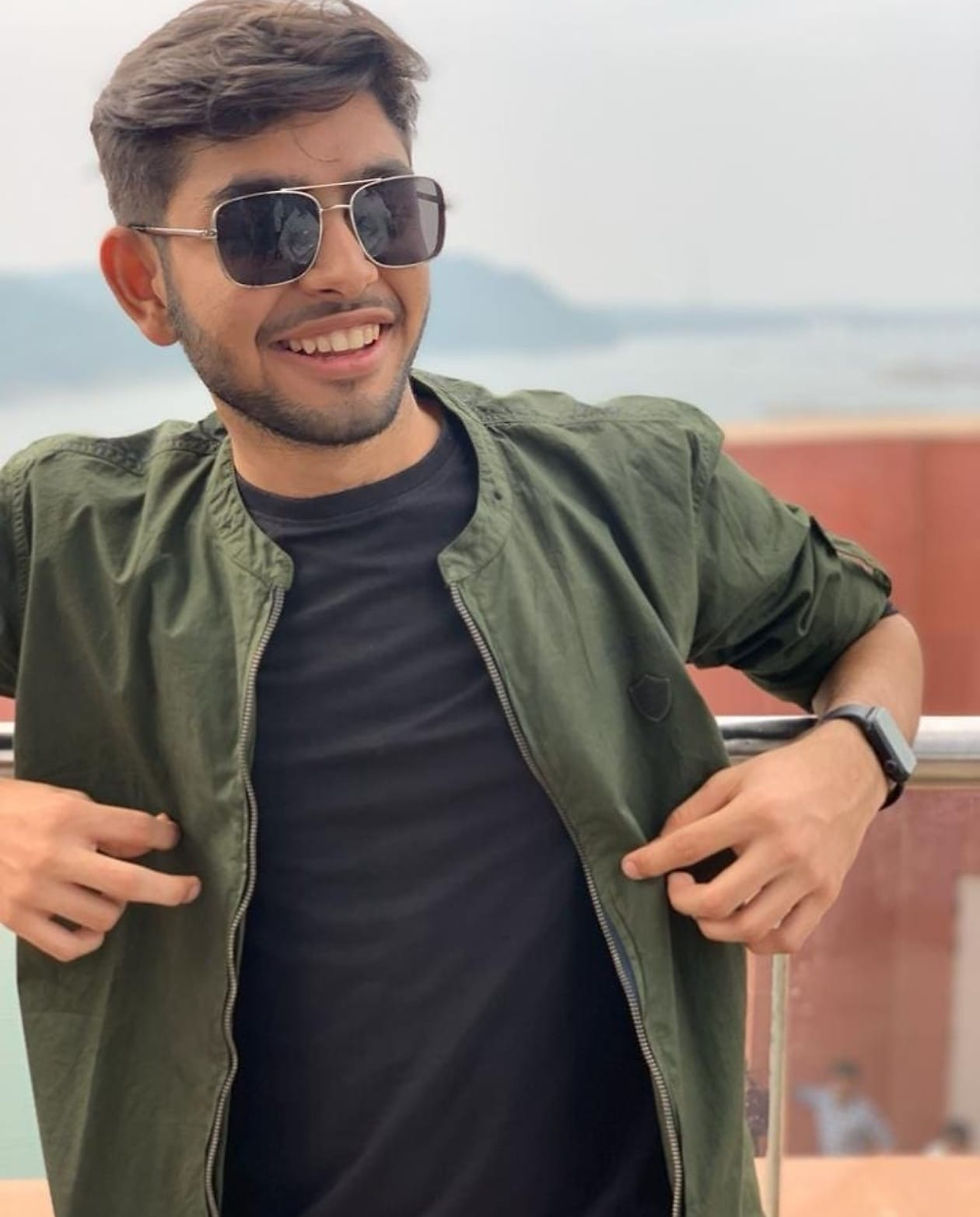
Hitarth D. Buvariya
Hitarth Buvaria was born and brought up in Rajkot, Gujarat. He studied Computer Engineering at Dharmsinh Desai University, Nadiad—the city that quietly shaped four of his most formative years and the setting of his essay. He recently completed his B.Tech and now works as a software engineer in Baroda, Gujarat.
Alongside his work in software engineering, Hitarth writes stories and plays and is a theatre artist. He is also deeply passionate about children’s education, particularly designing curricula that use stories, plays, and games to go beyond textbooks. Through these, he hopes to help children develop real-life skills and grow into better human beings, with morals and ethics woven into the storytelling itself.
Comments